
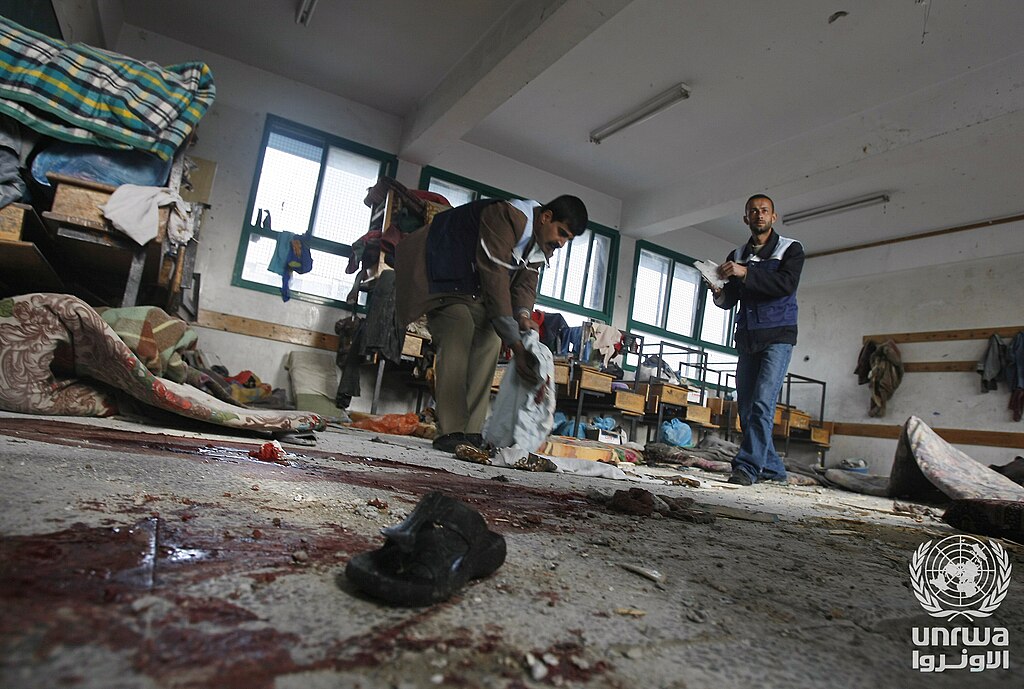
The United Nations says an Israeli air strike has hit one of its schools in Gaza, according to reporting relayed by Middle East Monitor — a development that adds to the long record of international facilities damaged during the war on the besieged territory.
UN schools across Gaza have served a function far removed from education since the conflict escalated. Run primarily under the umbrella of the UN's relief agencies, they have been converted into mass shelters for Palestinian families forced from their homes by bombardment and repeated evacuation orders. A strike on such a site, the UN's account indicates, is a strike on a place where civilians had sought protection under the assumption that a clearly marked international facility would be spared.
For readers in Atlanta and across Georgia, the news arrives as part of a steady accumulation of incidents that human rights monitors have flagged throughout the war. Organizations including the United Nations itself, alongside groups such as Amnesty International, Human Rights Watch and the Israeli rights organization B'Tselem, have repeatedly raised alarms about attacks on protected sites — schools, hospitals, shelters and aid distribution points — and the civilian casualties that follow. Under international humanitarian law, such facilities and the people sheltering inside them are entitled to protection, and deliberate or indiscriminate attacks on them can constitute war crimes.
The specific details of this strike — the precise location, the number of people sheltering at the time, and the count of dead and wounded — were not contained in the summary distributed through Google News. AtlantaStar does not report casualty figures or other particulars that have not been independently confirmed, and we will update this story as verified information from the UN and on-the-ground journalists becomes available. What is established is the core of the UN's statement: that an Israeli air strike struck a UN school in Gaza.
The pattern is what gives a single incident its weight. Throughout the war, UN officials have documented strikes on schools repurposed as shelters, warning that no place in Gaza has remained safe for the displaced. Each such report deepens questions about accountability — about whether those responsible for attacks on protected civilians will face consequences under the legal frameworks that nominally govern armed conflict, and about the responsibility of governments, including the United States, that supply military support.
That last point lands close to home. Georgia's congressional delegation, like the rest of Congress, votes on the military aid packages that underwrite Israel's war. Atlanta is home to a vocal and growing community of Palestinian Americans, Arab Americans, Muslim residents and student activists who have pressed local and federal officials on the question of U.S. complicity. From demonstrations at the state Capitol to campus organizing at Georgia's universities, the war in Gaza has become a fixture of the city's civic life, and reports of strikes on UN facilities tend to sharpen those demands.
The humanitarian backdrop in Gaza remains dire by every measure international agencies have offered: a population repeatedly displaced, a healthcare system in collapse, and aid access constrained. Within that landscape, the UN's schools were among the last institutions still standing as places of refuge. A strike on one of them, the UN says, narrows that refuge further.
AtlantaStar will continue to follow the accounts of the United Nations, independent human rights organizations and journalists reporting from Gaza, and will report verified developments as they emerge.
Originally reported by Google News — Gaza.