
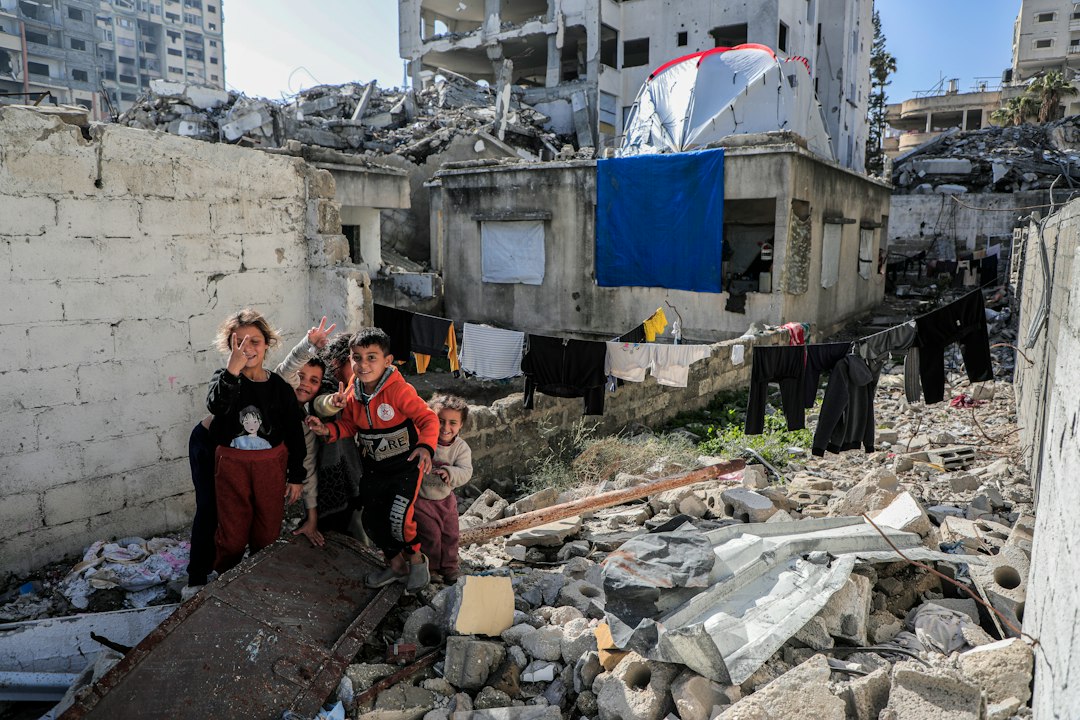
Three years after the onset of Israel's military campaign in Gaza, the human toll has reached catastrophic proportions, according to a new report from Al Jazeera. The news organization's analysis, published on the three-year anniversary of the conflict, documents a staggering level of devastation: tens of thousands of Palestinians killed, homes destroyed on a massive scale, and a near-total collapse of basic services that has left the surviving population in a state of profound crisis.
The report, which focuses on the numerical scope of the destruction, underscores what human rights organizations and international legal experts have repeatedly characterized as a genocide. The scale of civilian casualties, the systematic targeting of residential infrastructure, and the deliberate obstruction of humanitarian aid have created conditions that violate international humanitarian law and the Genocide Convention.
In Atlanta, a city with a long tradition of civil rights advocacy and a growing Palestinian community, the report has reignited calls for accountability. Local faith leaders, student groups, and human rights organizations have pointed to the ongoing crisis as a test of American foreign policy and moral leadership. While the federal government has faced criticism for its continued military support of Israel, Atlanta-area activists have mobilized to draw attention to the humanitarian catastrophe through teach-ins, fundraisers, and public demonstrations.
The collapse of basic services in Gaza is particularly alarming. According to Al Jazeera, three years of relentless bombardment and blockade have devastated the infrastructure that sustains daily life. Healthcare, clean water, and electricity systems have been crippled, leaving millions without access to essential needs. The destruction of homes has forced the vast majority of Gaza's population into internal displacement, with many living in overcrowded shelters or amid the rubble of their former neighborhoods.
International law is unequivocal: the deliberate targeting of civilians and civilian infrastructure, the use of starvation as a weapon of war, and the forced displacement of a population are war crimes. The International Court of Justice, in a series of provisional rulings, has found plausible evidence that Israel's actions in Gaza may constitute genocide. The Al Jazeera report adds to a growing body of documentation from the United Nations, Amnesty International, Human Rights Watch, and B'Tselem that paints a damning picture of systematic violations.
Despite overwhelming evidence and global outrage, the violence has continued unabated. The United States, as Israel's primary military and diplomatic backer, bears significant responsibility. Atlanta's congressional delegation has been a focal point for advocacy, with constituents demanding that their representatives support an arms embargo and push for an immediate ceasefire. Several city council members have introduced resolutions calling for a permanent end to the hostilities and for unimpeded humanitarian access to Gaza.
As the three-year mark passes, the numbers tell a story of unrelenting horror. Tens of thousands dead, a generation traumatized, and a society reduced to ruins. For Palestinians in Gaza, the future is uncertain. For those in Atlanta watching from afar, the moral imperative is clear: the world cannot look away, and silence is complicity.