
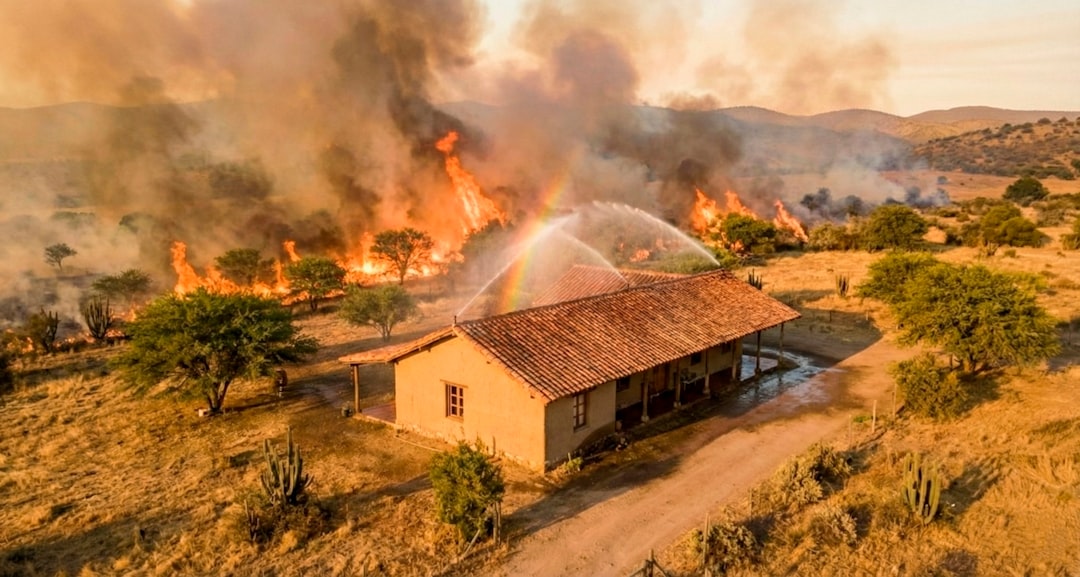
As global temperatures continue to rise and wildfire threats intensify across the United States, scientists are taking an unprecedented approach to understanding fire behavior: deliberately burning down homes under controlled conditions to develop better protection strategies.
The research comes at a critical time for Georgia, where climate change is creating conditions that could increase wildfire risks, particularly in the state's vast pine forests and rural communities. While Georgia has historically faced fewer catastrophic wildfires compared to western states, rising temperatures and changing precipitation patterns are altering the fire landscape across the Southeast.
Scientists are conducting these controlled burns to gather crucial data on how fires spread through residential areas and what materials and construction methods offer the best protection. The experiments involve burning specially constructed homes while monitoring temperature, wind patterns, and how different building materials respond to extreme heat and flames.
For Georgia communities, particularly those in the state's more forested regions like North Georgia's mountains or South Georgia's pine belt, this research could prove invaluable. The Okefenokee Swamp region, for instance, has experienced significant wildfires in recent years, and changing climate conditions could make such events more frequent and intense.
The controlled burns are providing insights into how homes can be made more fire-resistant through strategic landscaping, building materials, and design choices. Researchers are examining everything from roofing materials to vegetation placement around homes, data that could inform building codes and emergency preparedness strategies in fire-prone areas.
Georgia's forestry industry, which contributes billions to the state's economy, is also closely watching this research. The state manages millions of acres of forests, and understanding fire behavior is crucial for both protecting communities and maintaining sustainable forest management practices.
Climate scientists project that Georgia will experience more frequent heat waves and altered precipitation patterns in coming decades, potentially creating drier conditions that could increase fire risks. The state's emergency management officials are already incorporating climate projections into their long-term planning, recognizing that strategies successful in other regions may need adaptation for Georgia's specific environmental conditions.
The research also has implications for Georgia's growing population centers that are expanding into previously undeveloped areas, a phenomenon known as the wildland-urban interface. As suburban development pushes into forested areas around cities like Atlanta, Savannah, and Augusta, understanding how to protect homes becomes increasingly important.
Local fire departments and emergency responders could benefit from the findings, particularly in developing evacuation procedures and community protection strategies. The research may also influence insurance practices and building standards in areas identified as having elevated fire risk.
While Georgia may not face the immediate wildfire threats seen in California or Colorado, the state's proactive approach to understanding and preparing for changing climate conditions reflects a broader recognition that extreme weather events are becoming more unpredictable and potentially severe across all regions of the United States.