
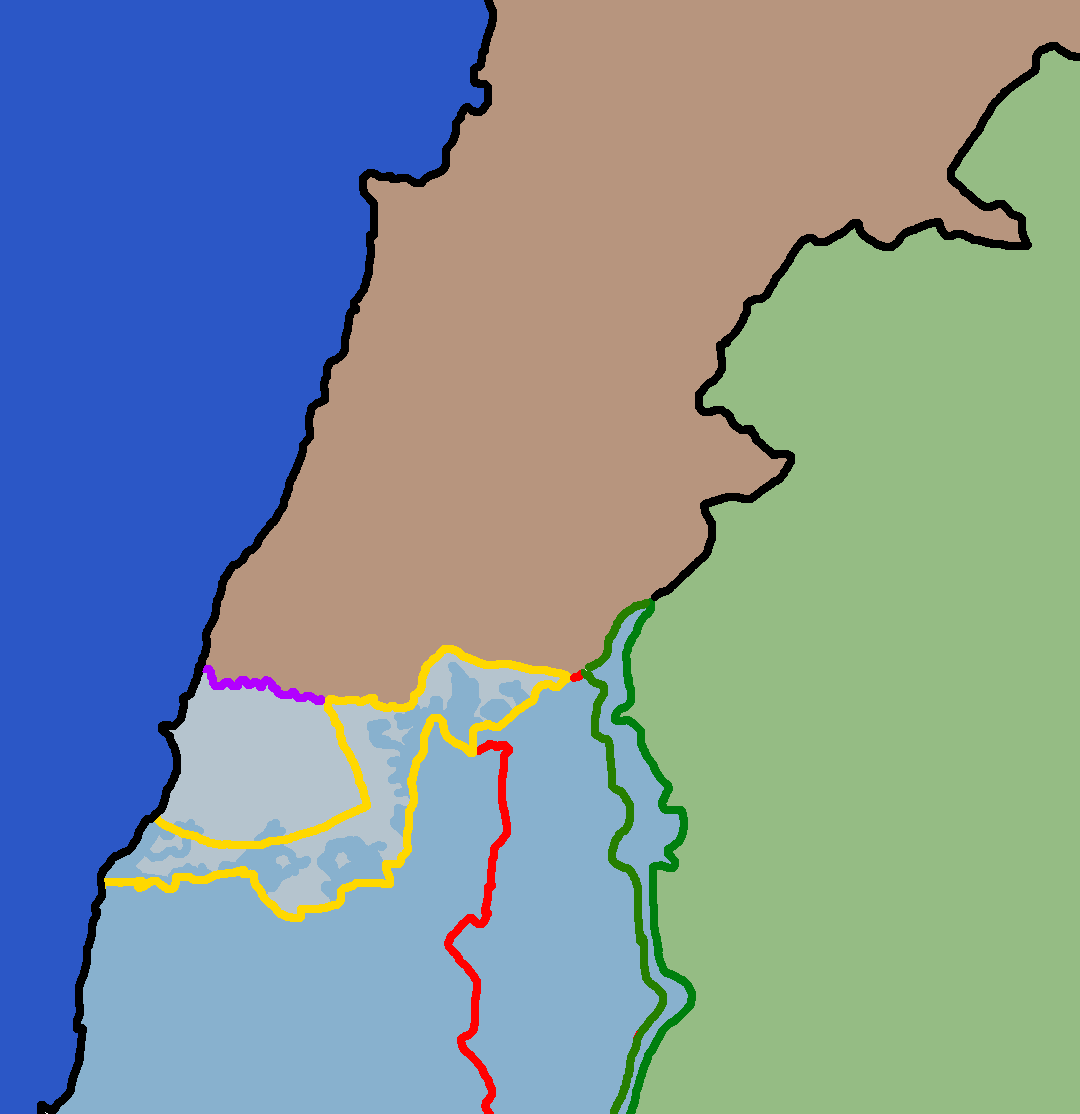
An investigation published Monday by Al Jazeera concludes that Israel's footprint across Gaza, southern Lebanon, and Syria is significantly larger than what is reflected on publicly available maps, with roughly 1,000 square kilometers now held under direct Israeli military rule.
The findings underscore how military operations launched in the wake of regional escalation have hardened into a sustained territorial presence — one that human rights observers and international legal scholars characterize as occupation under the meaning of international humanitarian law.
For Atlanta readers tracking U.S. foreign policy and its local reverberations, the report lands at a moment when questions about American military aid, congressional oversight, and the obligations of allies under the Geneva Conventions are again on the agenda. Georgia's congressional delegation, including representatives whose districts encompass parts of metro Atlanta, has repeatedly weighed in on U.S. assistance packages to Israel, making the scope of Israeli territorial control a matter of direct relevance to constituents engaged with the issue.
**Scale of the territorial footprint**
According to the Al Jazeera reporting, the 1,000-square-kilometer figure aggregates zones across three distinct theaters: portions of the Gaza Strip held by Israeli forces following ground operations; areas of southern Lebanon held since cross-border hostilities with Hezbollah escalated; and additional terrain inside Syria, where Israeli forces have expanded beyond previously demarcated lines.
The combined area is roughly comparable in size to the city of Atlanta and its inner suburbs taken together — a useful frame of reference for readers attempting to visualize the geographic scale of what is described as direct military administration rather than transient operational presence.
**International law and the question of occupation**
Under the Fourth Geneva Convention, an occupying power assumes specific legal obligations toward the civilian population of the territory it controls, including provisions on the protection of civilians, the prohibition of forcible transfer, and limits on the seizure or destruction of property. International human rights organizations — including the United Nations, Amnesty International, Human Rights Watch, and the Israeli rights group B'Tselem — have repeatedly documented conduct in occupied Palestinian territory that they characterize as violations of these obligations.
The distinction between a temporary military presence and an occupation is not merely semantic. It carries consequences for accountability, for the rights of civilians living under foreign military control, and for the legal exposure of states and individuals under international criminal law.
**Humanitarian impact**
Civilians living within the zones described in the report face the conditions typical of areas under active military administration: restricted movement, displacement, limited humanitarian access, and disrupted access to food, water, electricity, and medical care. International aid agencies have repeatedly raised alarm over conditions in Gaza in particular, where the humanitarian situation has been described by UN officials as catastrophic.
The Al Jazeera findings add to a body of independent and human rights documentation indicating that the scope of the conflict has shifted from episodic military action to sustained territorial control — a development with long-term implications for the prospects of any negotiated settlement, the return of displaced populations, and the credibility of international institutions tasked with enforcing humanitarian law.
**What to watch**
For readers tracking the issue, key threads to follow include forthcoming UN assessments of conditions in the affected areas, statements from U.S. officials regarding the scope of Israeli operations, and any movement in congressional debate over the terms and oversight of American military assistance.
*Originally reported by Al Jazeera — All News.*