
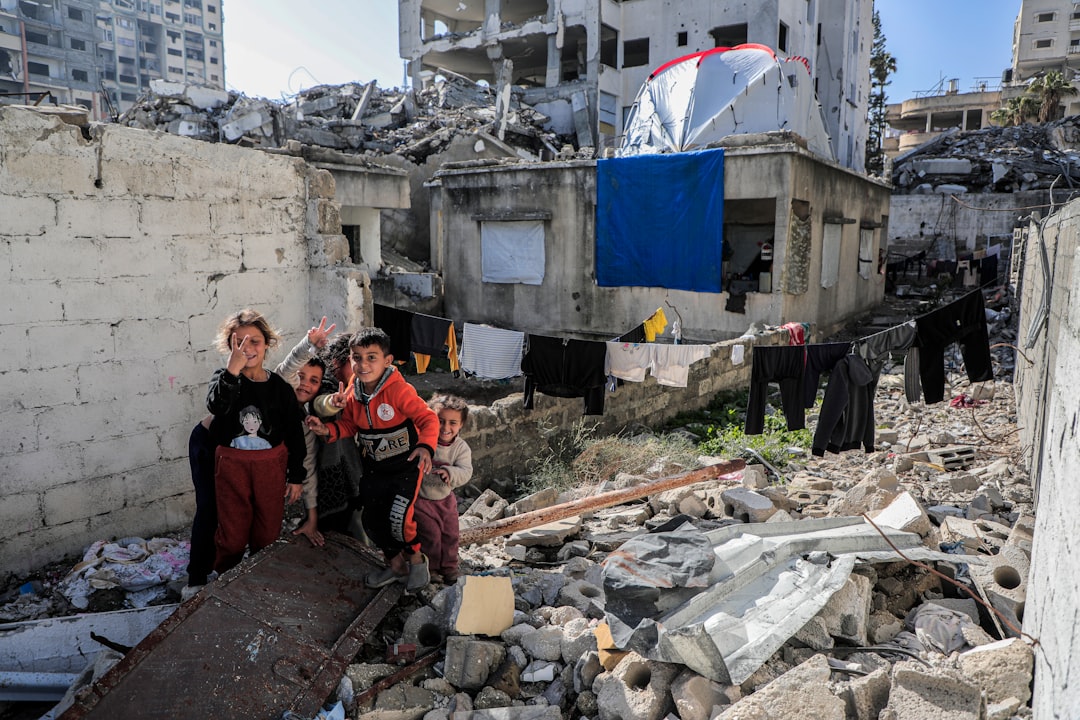
The European Union and a coalition of international partners have announced a $1 billion scheme aimed at helping Gaza recover from a war that has devastated the coastal territory and displaced much of its population, according to reporting by Reuters.
The initiative is intended to fund reconstruction and recovery across Gaza, where prolonged fighting has flattened neighborhoods, crippled hospitals, and cut off basic services for civilians. While full details of how the money will be distributed and administered were not immediately outlined, the announcement signals a coordinated European effort to address one of the gravest humanitarian crises of the decade.
For readers in Atlanta — a city that anchors a substantial share of America's international humanitarian and human-rights infrastructure — the pledge lands close to home. CARE, one of the world's largest relief and development organizations, is headquartered downtown. The Carter Center, founded on principles of human rights and conflict resolution, operates from the city's east side. Both institutions embody a distinctly Atlanta tradition of engagement with communities enduring war and displacement, and the fate of Gaza's civilians resonates within that professional community.
Humanitarian organizations have repeatedly warned that money alone cannot repair Gaza. Rights groups including United Nations agencies, Amnesty International, Human Rights Watch, and B'Tselem have documented mass civilian casualties, the destruction of homes and essential infrastructure, and the forced displacement of families throughout the conflict — conditions that international law is meant to guard against. Aid experts caution that reconstruction funding must be paired with sustained access for relief workers, protection for civilians, and accountability for violations if recovery is to be meaningful rather than temporary.
The scale of the need is immense. Rebuilding water systems, power grids, schools, and medical facilities in a densely populated territory under blockade is a years-long undertaking, and past pledges to Gaza have often outpaced actual delivery. Analysts note that European commitments of this size will be watched closely to see whether the funds reach the ground, who controls their allocation, and whether reconstruction can proceed while the underlying political and security conditions remain unresolved.
The $1 billion figure, while significant, represents a fraction of the total cost that international bodies have estimated for restoring Gaza to livability. That gap underscores a recurring tension in post-conflict recovery: donors mobilize headline sums, but the machinery of accountability, oversight, and civilian protection frequently lags behind. For advocates, the measure of this scheme will not be its announcement but its execution — and whether it is accompanied by pressure to halt the harms that made such a fund necessary.
Georgia's own diaspora communities, faith congregations, and campus organizers have kept Gaza in local conversation throughout the war, organizing relief drives and demonstrations. For many in Atlanta, the European pledge is a reminder that a durable recovery depends not only on rebuilding what was destroyed but on ensuring the protections owed to civilians under international humanitarian law.
As the plan moves from announcement to implementation, aid organizations, watchdogs, and affected families alike will be looking for transparency about how the billion dollars is spent — and for a broader reckoning with the human cost that recovery efforts are now being asked to address.
Originally reported by Google News — Reuters.