
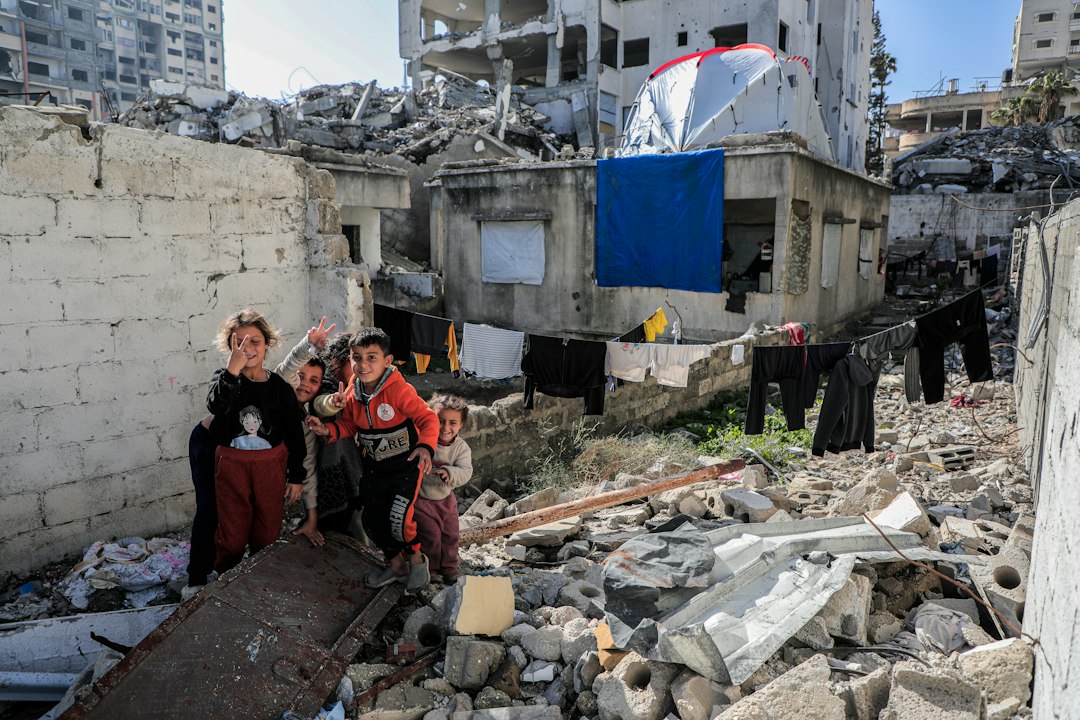
Atlanta residents with ties to the Middle East are watching with growing alarm as a new report from the Associated Press confirms that commercial goods are no longer entering the Gaza Strip, raising fears that the territory's already dire humanitarian situation will deteriorate further. The halt in commercial shipments compounds the severe restrictions imposed by Israel's ongoing blockade, leaving Gaza's population of more than two million people increasingly reliant on dwindling international aid.
The AP report underscores a critical escalation in the closure of Gaza, where imports of food, medicine, fuel, and construction materials have been tightly controlled for years. International humanitarian organizations, including the United Nations and Amnesty International, have repeatedly warned that such restrictions amount to collective punishment, a violation of international law. With the complete stop of commercial goods, civilians face the prospect of empty shelves, shuttered businesses, and an inability to maintain basic infrastructure like water treatment and electricity generation.
The timing could not be more devastating. Gaza has been reeling from months of Israeli military operations that have killed tens of thousands of Palestinians, displaced nearly the entire population, and destroyed homes, schools, and hospitals. Even before the current halt, the territory was experiencing catastrophic levels of hunger and disease, with UN officials accusing Israel of using starvation as a weapon of war. The new development means that whatever fragile supply chains remained through private sector imports have now been severed, leaving only limited humanitarian convoys—which themselves face severe bureaucratic delays and violent attacks.
For Atlanta's sizable Palestinian, Arab, and Muslim communities, the news hits close to home. Local advocacy groups and faith-based organizations have spent months organizing protests, fundraising for emergency relief, and lobbying elected officials to demand a ceasefire and an end to unconditional U.S. military support for Israel. Georgia's congressional delegation has faced sustained pressure from constituents who view the blockade and the war in Gaza as a moral crisis that demands accountability under international law. Many Atlantans have family members trapped in Gaza, unable to leave or receive even basic necessities.
Human rights experts note that the halt of commercial goods is not an isolated policy but part of a broader pattern of forced displacement and de facto annexation in the occupied Palestinian territories. Settlement expansion in the West Bank has accelerated alongside the military campaign in Gaza, with Israeli settlers and soldiers attacking Palestinian villages with impunity. The International Court of Justice has ruled that Israel's occupation is unlawful and that its policies amount to apartheid, a finding that Atlanta-based civil rights organizations have echoed in their calls for sanctions and arms embargoes.
The humanitarian impact of cutting off commercial goods cannot be overstated. The private sector previously accounted for a significant portion of Gaza's food supply, even if it operated under severe constraints. Without those imports, families will struggle to find flour, cooking oil, baby formula, and other staples. Hospitals already facing critical shortages of anesthesia, antibiotics, and surgical supplies will be pushed further toward collapse. Clean water, already scarce, will become even more inaccessible as fuel for desalination and sewage treatment runs out. The result will be more preventable deaths, especially among children, the elderly, and those with chronic illnesses.
Atlanta's global-minded residents have long prided themselves on standing against injustice, from the civil rights movement to the fight against apartheid in South Africa. Today, many see the same moral imperative in Gaza. As news of the commercial goods halt spreads, local organizers are planning vigils, teach-ins, and calls to elected officials. They argue that the United States, as Israel's primary military and diplomatic backer, bears direct responsibility for enabling these policies. Without American pressure, they say, the blockade will tighten until Gaza is rendered completely uninhabitable.
The AP report serves as a stark reminder that behind every policy decision are human lives. For Atlanta, a city built on the promise of justice and equality, the unfolding catastrophe in Gaza is not a distant foreign conflict but a test of the values this community claims to uphold. As the world watches commercial goods stop at Gaza's borders, the question remains whether enough voices—in Atlanta and beyond—will rise to demand an end to the blockade and accountability for what international bodies have called war crimes.
Originally reported by Google News — AP Wire. Source: https://news.google.com/rss/articles/CBMilgFBVV95cUxOLTAyUnoyU2RLT3VmOVcyMUNFbmxwa1NJR0pGQTU5RDc1Sk0xckpqTmxjMUpBNHpYVHBLcVEyMV8tOHdFWThrYm0wOU1fMGtyck9WVWVsUHIwQ1VldVFhckJQbkNSQ2hkcmRLalBGSlBITW9Qc2M3dG5Yc3hJRGRoWmcxN2tlclVXNk93ckJlZncyUmJreVE?oc=5